

How to Master the Knowledge Illusion That Will Help You Lead Better Teams
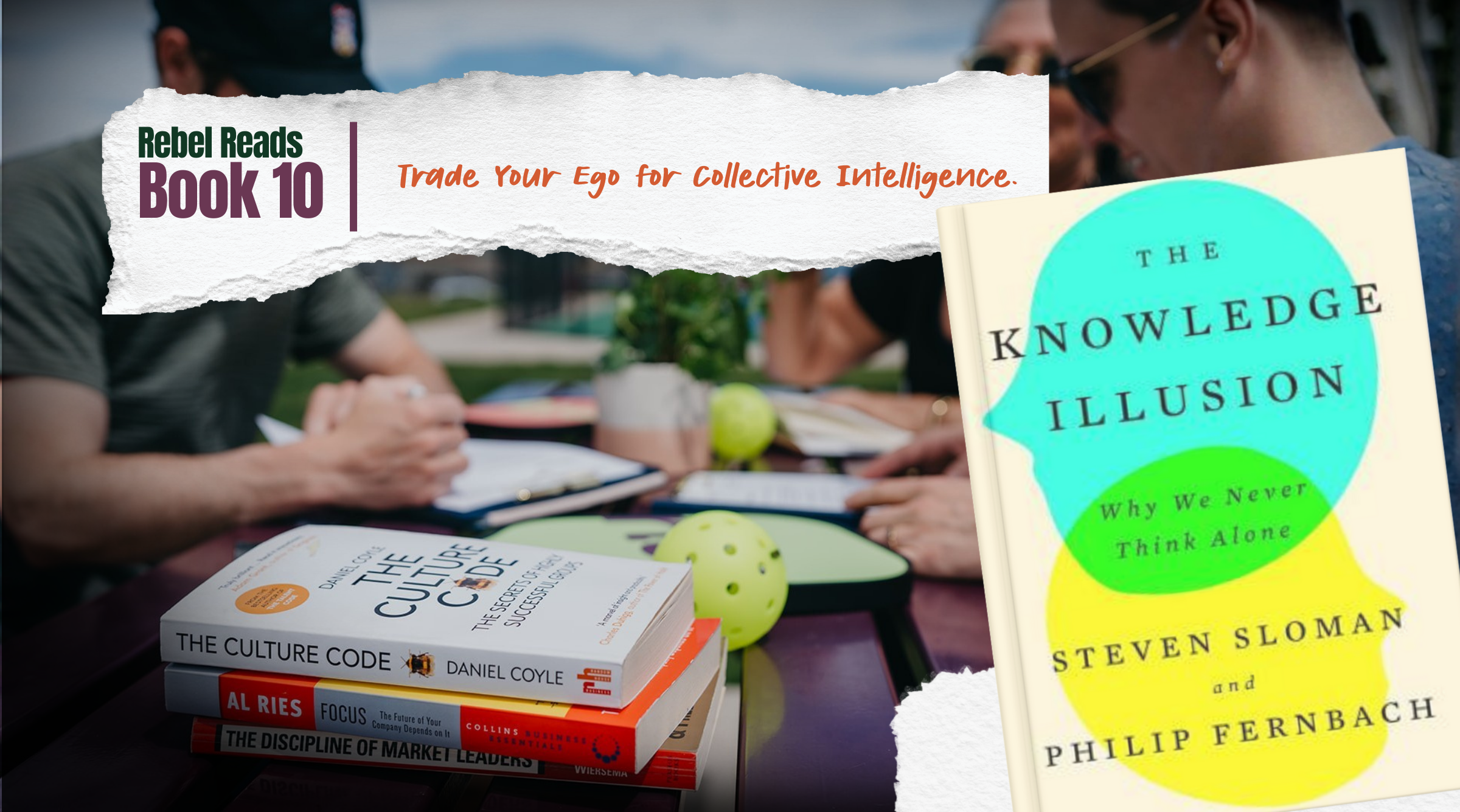
Do you truly understand how your business scales, or do you just know the buzzwords? Most entrepreneurs suffer from a hidden cognitive bias. This bias tricks us into thinking we understand complex systems just because we have access to them. In the book The Knowledge Illusion, authors Steven Sloman and Philip Fernbach reveal that humans are designed to rely on others. We mistake the knowledge sitting in our community for the knowledge inside our own heads.
The Hidden Danger of the Google Effect
We live in an era where information is always a click away. Because we can search for an AI strategy or a marketing framework, we believe we possess that expertise. This is a dangerous trap for "rebel" leaders who feel the need to be the smartest person in the room. When you mistake access for understanding, you make shallow decisions. You might try to implement a scaling strategy that you cannot actually explain in detail.
Think about the simple things in your life. Could you explain the mechanical process of how a zipper works or how a toilet flushes? Most people fail this test. In business, this illusion leads to overconfidence and eventual burnout. You do not need to have all the answers to be a successful rebel entrepreneur. You only need to know how to tap into the collective intelligence of your ecosystem.
Why Your Hive Mind Is Your Greatest Asset
The authors argue that our success depends on the "knowledge community" around us. We are part of a hive mind. Intelligence does not reside in a single brain; it lives in the connections between people. Great leaders are not those who hoard facts. They are the ones who build resilient teams of specialists.
When you accept that you are not as smart as you think, you gain a competitive advantage. You stop overrelying on your own genius. This allows you to empower your team members who have the deep, granular knowledge you lack. This shift from "I know" to "We know" is the foundation of a truly scalable business.
Overcoming the Ego of the Solo Founder
Many founders believe that delegating is just about offloading tasks. In reality, delegating is about acknowledging that someone else has a deeper "depth of understanding" than you do. If you try to control every technical detail, you stifle the hive mind. The book The Knowledge Illusion suggests that the most successful people are those who understand the boundaries of their own minds.
Recognizing these boundaries prevents the typical "rebel" pitfall of trying to do everything alone. When you admit that your team knows more about certain verticals than you, you create space for innovation. You no longer have to be the expert on every piece of software or every marketing algorithm. You become the curator of expertise rather than the sole practitioner.
The Science of Collective Intelligence in Business
Cognitive science shows that humans evolved to store information outside of their own bodies. We use tools, books, and other people to expand our capabilities. In a modern business environment, this means your "smartness" is actually the sum of your team's skills. If you have 10 people on your team, you have access to 10 lifetimes of specialized learning.
This perspective shift changes how you approach January planning. Instead of setting goals based on what you think you can do, set goals based on what your community can achieve. You stop being a bottleneck and start being a facilitator. This is how you move from a struggling startup to a resilient, high-growth company. To see how your current leadership structure stacks up against this model, you can book an alignment call to map out your business ecosystem.
How to Build a Smarter Business Ecosystem
Building a smarter ecosystem requires humility. Jade Baranski and the Rise and Rally team empower leaders to move past the knowledge illusion with these steps:
Audit your expertise and identify where you are simply repeating buzzwords.
Ask your team members to explain complex processes to you in detail.
Stop using ChatGPT or Google as a substitute for real human collaboration.
Focus on "who" to ask rather than "how" to do it yourself.
Create a culture where "I do not know" is a valid and respected answer.
Map out your knowledge community to see where your biggest gaps exist.
Spend 10 minutes each day learning who the true expert is for every major task in your funnel.
Also read: The Secret Mental Skill Most Business Leaders Never Train
Real intelligence is about navigation, not just storage. For January, let's stop pretending we have every detail figured out. If you are ready to get over yourself and start building a more resilient company, The Knowledge Illusion is a must-read. It is time to stop Googling and start leading your hive mind toward actual results.